Dressing with Intention Starts Before the Trip
Packing for a trip used to feel more complicated than it needed to be. No matter where I was going, I always felt like I needed more options, more outfits, and more “just in case” pieces.
But over time, I realized the problem wasn’t how much I packed, it was how disconnected my wardrobe felt from itself. Some pieces only worked for one outfit or occasion, which made getting dressed while traveling feel more overwhelming than effortless.
This year, instead of approaching my wardrobe season by season, I started thinking about it with more intention. I wanted pieces that could layer well, adapt easily, and work together naturally, whether I was at home or packing for a trip.
Reworking My Wardrobe Around My Season
That shift started with something I had never really considered before: color.
Seasonal color analysis suggests certain tones naturally complement your features, grouping them into palettes like spring, summer, autumn, or winter. Finding yours can make a wardrobe feel more cohesive and easier to style.
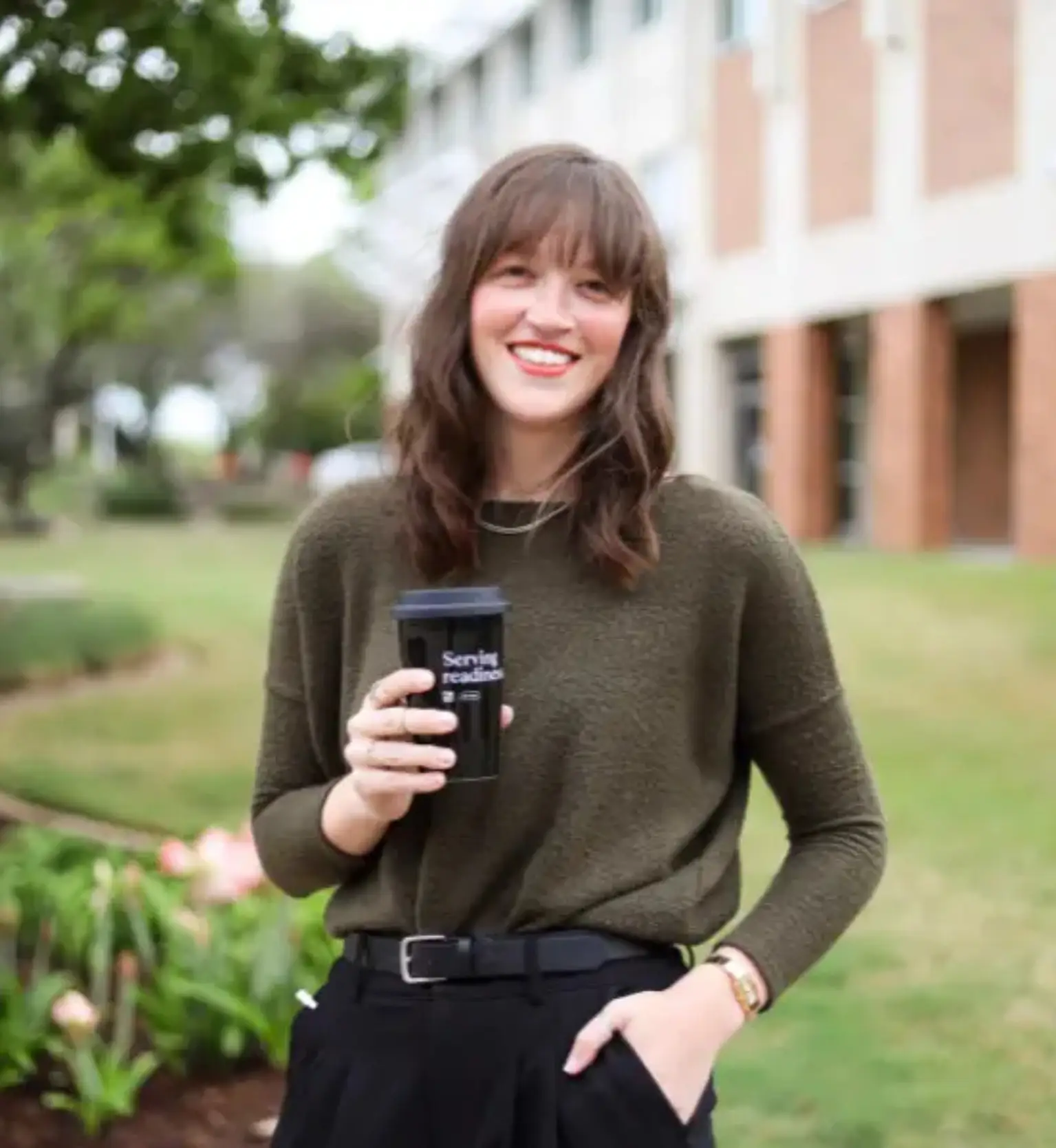
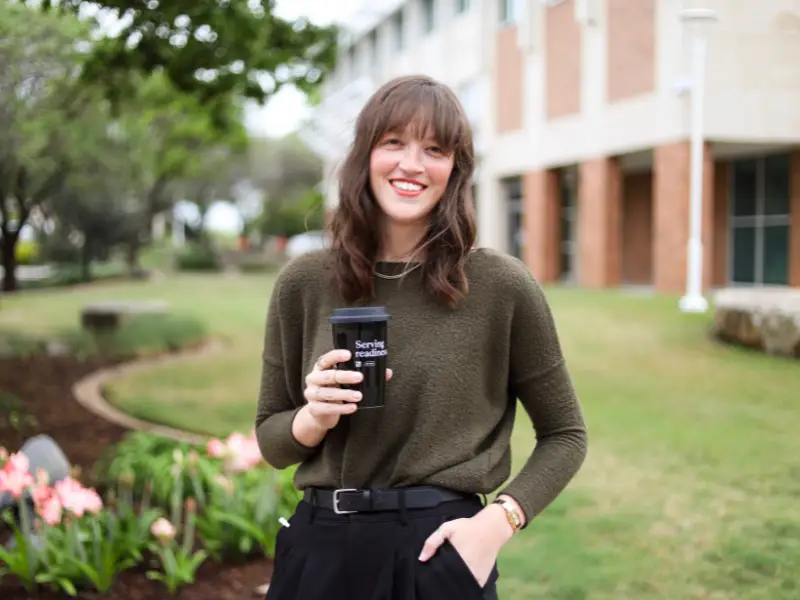
For all of my adult life, my wardrobe has lived almost entirely in black, white, and gray. It was simple, safe, and easy to style. But after having my colors analyzed, I learned I’m a True Autumn. My best colors look a lot like fall itself: warm, rich, earthy tones, like the colors of leaves as they change.
That didn’t change what I wear as much as how those pieces show up. My version of “neutral” shifted, and suddenly familiar outfits felt more intentional. That subtle shift is what made familiar pieces feel new again.
The Pieces That Make My Wardrobe Work
At its core, building a versatile wardrobe is about adaptability. Whether I’m getting dressed at home or packing for a trip, I want pieces that can adjust with me throughout the day.
Lightweight layers are essential. Think easy knits, breathable button-downs, and transitional outerwear that adds warmth without feeling heavy. They make it possible to build an outfit in the morning and adapt it as the day changes.
I also adjust how I use color and texture depending on the season or environment. Instead of the deeper tones I naturally gravitate toward, I’ll reach for lighter versions within my autumn palette, like swapping a forest green for moss or olive. I’ll pair textured pieces, like knits, with lighter neutrals instead of darker ones. It keeps the overall look grounded while still feeling balanced and adaptable.
Underneath it all, I think of my wardrobe in two categories: base pieces and anchor pieces.
Base pieces are the foundation of an outfit. They’re simple, versatile, and easy to build on like a loose-fitting tee, a lightweight knit, or a pair of tailored trousers in a neutral tone.
Anchor pieces are what give an outfit interest and intention. They pull everything together, like a structured jacket, a statement layer, or even a bold color that stands out against the rest of the look.
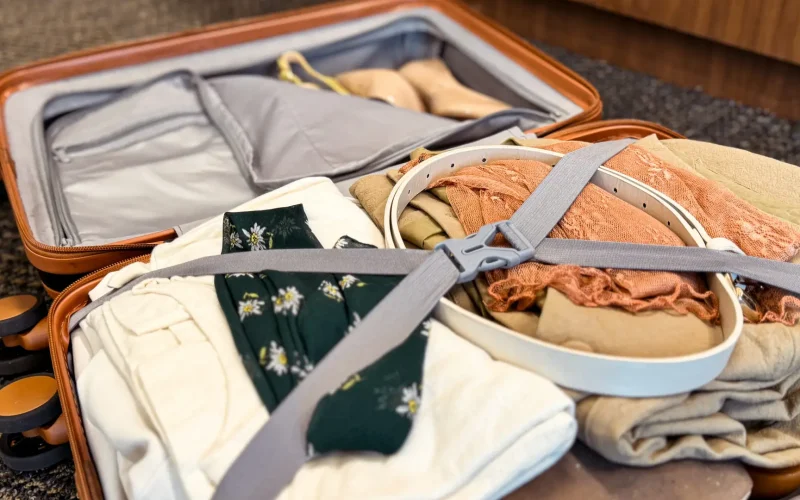
This balance becomes especially important when I’m packing. When every piece needs to work a little harder, having a solid base and a strong anchor makes getting dressed feel much more effortless.
Once I started thinking in terms of base and anchor pieces, I realized I was already following a basic formula when I got dressed, but it was also shaped by the types of styles I’m drawn to.
The Balance Behind My Style
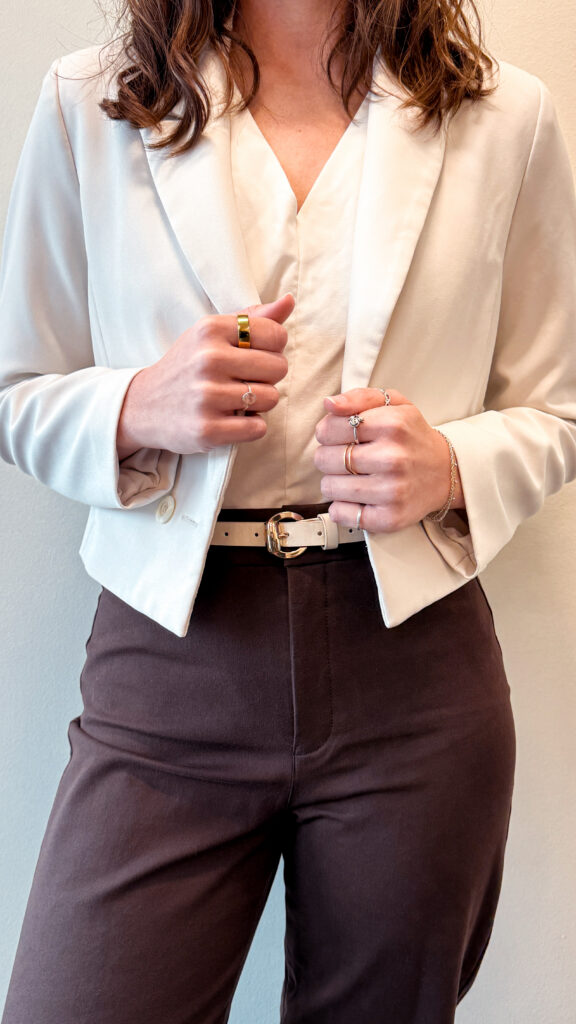
Deconstructed, my wardrobe is shaped by three style influences: Natural, Dramatic, and Romantic. I don’t think about them too rigidly, but they give me a helpful lens for understanding why certain pieces feel more like me than others.
Over time, I’ve found that keeping a general balance between them makes my wardrobe feel both cohesive and versatile. As a rule of thumb, I aim for about 50-60% Natural, 25-30% Dramatic, and 10-20% Romantic.
That mix works because it creates a sense of ease first, with just enough structure and softness layered in. The Natural pieces keep everything grounded and wearable, the Dramatic elements add contrast and a bit of edge, and the Romantic details soften the overall look so it never feels too heavy or severe.
It’s not about getting the percentages exactly right, but having that balance in mind makes it much easier to build outfits that feel like a true reflection of my style. And more often than not, that balance shows up in the same simple outfit formula.
My Go-To Outfit Formula
When I’m getting dressed, I don’t start from scratch. I start with a system:
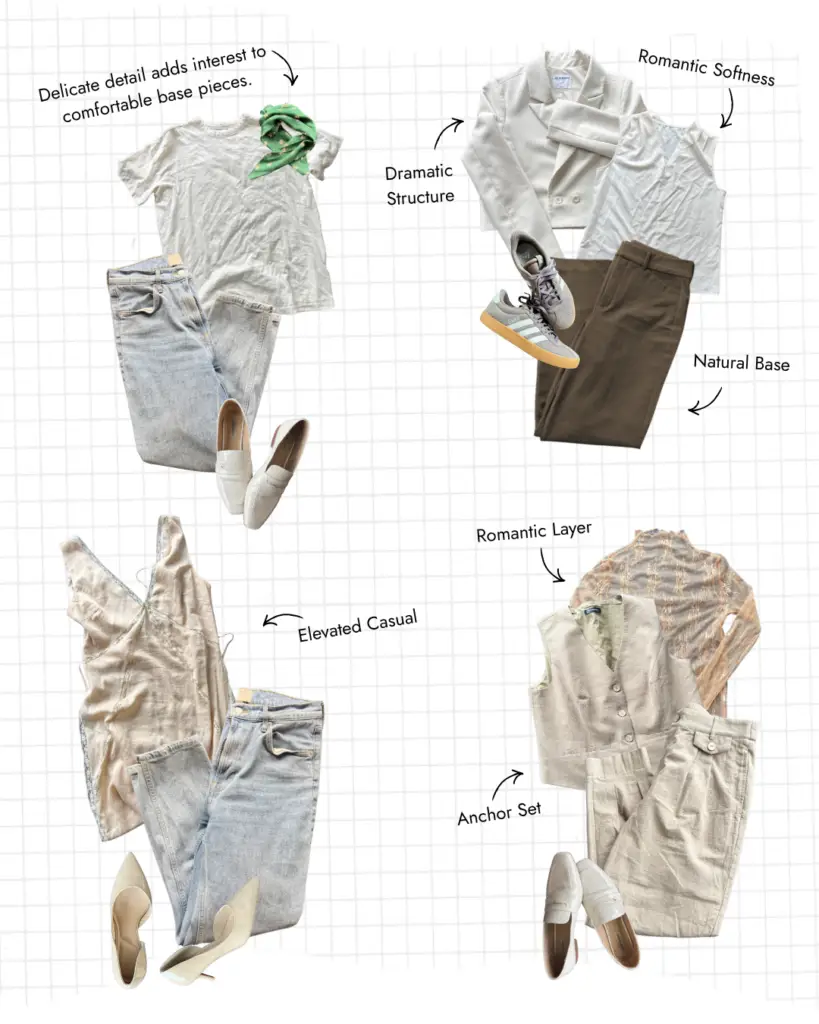
a base piece + something soft + a dramatic layer
The base piece is my starting point. It’s usually something relaxed and comfortable, like a tee, a lightweight knit, or a simple dress.
From there, I add something soft, which is where those more romantic elements come in. This might be a flowy fabric, a subtle print, or a delicate accessory that adds a bit of femininity to the overall look.
Finally, I finish with a dramatic layer. This is the piece that gives the outfit form and pulls everything together, which is often a jacket, blazer, or more tailored layer that adds shape and definition.
What I love about this formula is that it’s flexible. The pieces can change depending on the weather or the occasion, but the structure stays the same. It gives me just enough direction to get dressed easily, while still leaving room to experiment.
The Comfort of Cohesion
Getting dressed feels less about having the perfect outfit and more about understanding what works for me. Once I started building my wardrobe around versatility instead of individual pieces, packing became much easier too.
I no longer feel like I need endless options to feel prepared for a trip. When your wardrobe is built on pieces that layer well, adapt easily, and work together naturally, getting dressed becomes far more effortless, whether you’re at home or living out of a suitcase for a few days.
For me, that’s what it means to build a wardrobe that travels well.